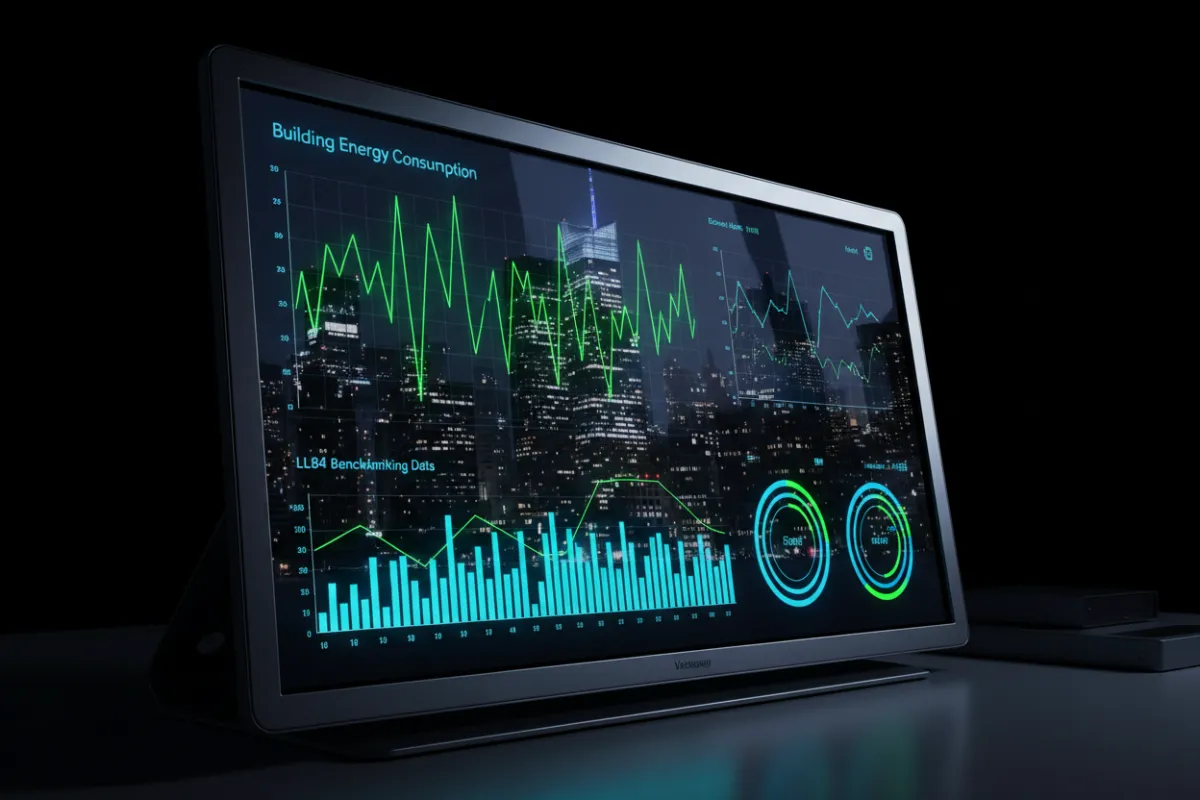
Local Law 84 Benchmarking: NYC Energy & Water Reporting Background and Why It Matters
What Local Law 84 Is — And Why It Was Created
Local Law 84 (LL84), NYC’s energy and water benchmarking law, is one of the city’s earliest and most important energy disclosure rules. It was passed in 2009 as part of the Greener, Greater Buildings Plan to help tackle the enormous amount of energy used by large buildings — because buildings account for nearly half of the city’s total energy consumption.
LL84 doesn’t tell you how to cut energy or install equipment. Instead, it measures how much energy and water your building used in a calendar year, which creates a baseline against which improvements can be tracked. That philosophy is often summed up in the saying:
“What gets measured gets done.”
— Peter Drucker (widely attributed)
And that idea is central to LL84: by measuring usage citywide, owners, policymakers, and residents gain the visibility needed to motivate efficiency improvements and broader emissions reductions.
Who Must Benchmark
Covered buildings are those that meet certain criteria — most commonly:
A single building over 25,000 sq ft, or
Two or more buildings on the same tax lot totaling 100,000 sq ft or more, or
Multiple condo buildings governed by the same board that together exceed 100,000 sq ft.
Every year, the NYC Department of Finance publishes the Covered Buildings List so owners and boards can check if their property is subject to LL84 reporting. (NYC Government)
The Benchmarking Deadline — May 1
LL84 requires owners of covered buildings to measure and report energy and water usage for the previous calendar year. That benchmarking data must be submitted to the city by May 1 each year — (in 2025, there were some extensions.)
This deadline gives the city consistent, annual visibility into building performance across NYC — and it’s the backbone that supports other energy laws like Local Law 33 (energy grades) and Local Law 97 (emissions limits).
Penalties for Missing the Deadline
NYC enforces LL84 with fines for late or missing benchmarking reports:
If a report isn’t filed by the May 1 deadline, buildings may be issued a violation with a $500 penalty per quarter, up to $2,000 per year. (NYC Government)
Those penalties add up fast — and benchmarking data also feeds into other requirements, meaning a missing report can trigger downstream headaches.
Why Benchmarking Matters Beyond Compliance
LL84 isn’t just a box-to-check. The data collected:
Helps building teams spot where they’re using the most energy,
Enables benchmarking against similar buildings,
Supports strategic planning and upgrades, and
Provides the foundation for energy grades under Local Law 33. (NYC Government)
In short, benchmarking turns raw utility usage into insight — and insight is what makes improvements possible.
Bottom Line
Local Law 84 was designed to shine a light on how buildings in NYC use energy and water. It doesn’t tell you what to fix — it gives you the data to decide what matters most. And that clarity makes compliance, planning, and future savings possible.
Want to explore your building’s LL84 status?
👉 Visit https://nyccompliancecalendar.com/post/nyc-energy-compliance-local-laws-84-87-33-88-97 and see how it ties into your building’s energy efficiency path today.
Go Back To Compliance Calendar Page


