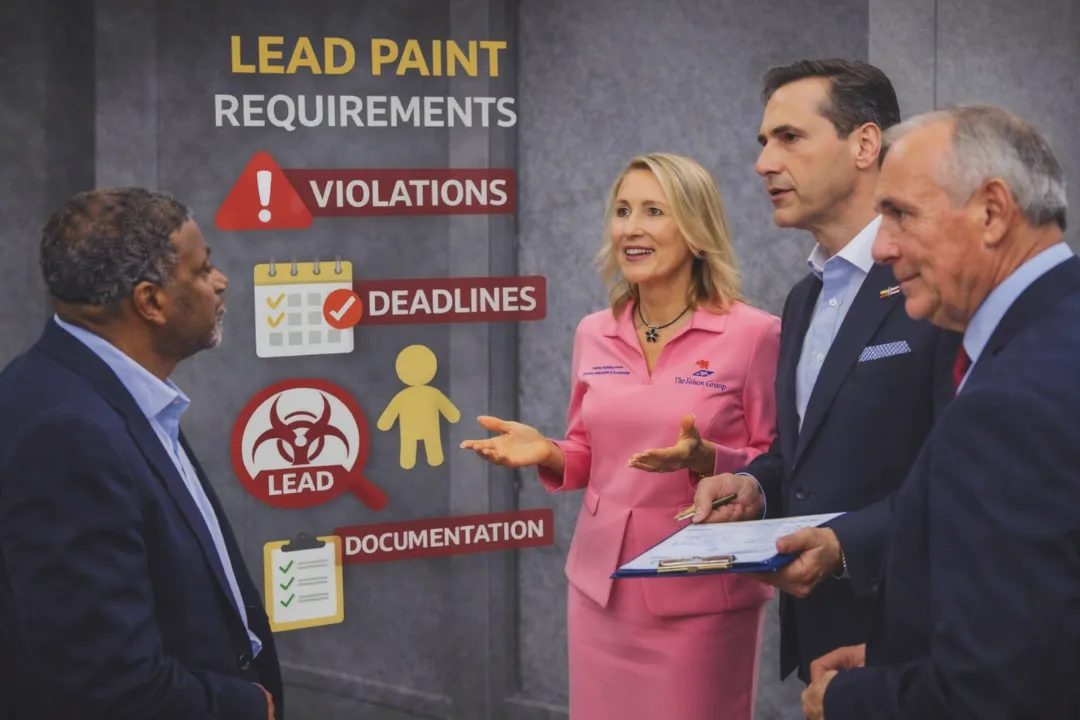
NYC Lead Paint Safety Notice: Co-op & Condo Board Compliance Guide
If one simple notice could help prevent a child from suffering lifelong health problems, wouldn’t you want to make sure your building gets it right?
Every year, NYC co-ops and condos must send the Lead Paint Safety Notice to residents by February 15. It’s one of the most important — and most misunderstood — safety requirements in the city.
From all of us at The Folson Group, here’s your clear, friendly guide to what this notice is, why it exists, who’s responsible, and how you keep your building safe and compliant.
The Lead Paint Safety Notice is required by NYC’s Housing Preservation & Development (HPD) for most residential buildings built before 1960, and in some cases up to 1978.
Each year, you must notify residents:
About the dangers of lead-based paint
To ask if a child under 6 years old lives in the apartment
To remind them of their rights and the building’s duties
Residents are asked to return the form confirming whether a young child lives there.
If the answer is yes, the building has extra responsibilities.
February 15 — Send the Notice
By this date every year, your building must deliver the lead paint notice to every apartment.
March — Follow Up on Responses
If residents don’t reply, you must make reasonable attempts to collect the form by another date in March.
This is a two-part job:
Send it.
Prove you tried to get it back.
Both are required.
Lead paint was common in older buildings.
When it chips or turns to dust, young children can swallow or breathe it in.
The result can be:
Learning disabilities
Behavior problems
Development delays
Long-term health issues
These effects can last a lifetime.
NYC created strict lead laws because too many children were being harmed in their own homes. This notice is the first line of defense.
If a resident reports a child under 6, the building must:
✔️ Keep the apartment lead-safe
✔️ Fix peeling paint right away
✔️ Use certified workers for repairs
✔️ Follow safe work practices
✔️ Document all work
✔️ Provide required records
In many cases, this means inspections and ongoing attention, not just a one-time fix.
Ignoring this can lead to serious penalties.
Failing to send the notice, track responses, or act when a child lives there can result in:
HPD violations
Heavy fines that grow over time
Orders to correct conditions quickly
Lawsuits if a child is harmed
Loss of trust from families
Worst of all, a child could be exposed to lead when it could have been prevented.
That’s why HPD treats lead safety as a top priority.
Typically:
Board of Directors – Ultimately responsible for compliance
Property Manager – Sends notices and tracks responses
Super/Staff – Reports peeling paint, coordinates access
Certified Vendors – Perform lead-safe repairs
Consultants (like The Folson Group) – Guide and oversee the process
Even if your manager handles the day-to-day, the board carries the responsibility if something goes wrong.
HPD expects you to show effort, not just good intentions.
Reasonable attempts may include:
Reminder letters or emails
Notes under doors
Phone calls
Certified mail
Keeping a log of dates and actions
If HPD inspects, you should be able to prove:
✔️ When the notice went out
✔️ Who responded
✔️ How you followed up
No paper trail = trouble.
A board sends the notices.
Most residents respond. A few don’t.
Months later:
A family with a toddler complains about peeling paint.
HPD shows up.
There’s no record of their lead notice response.
Now the building faces violations and emergency repairs — even though this could’ve been caught early.
This is how small gaps turn into big problems.
In general, lead notice rules apply to:
Buildings built before 1960
Buildings built 1960–1978 if lead paint is known or assumed
Most NYC co-ops, condos, and rentals in older properties
If your building is older — and many NYC buildings are — it’s safest to assume this applies to you.
When in doubt, treat it seriously.
Because it’s not just one task.
It involves:
Annual notices
Tracking children moving in and out
Watching for peeling paint
Using special workers
Keeping records for years
Without a system, it’s easy to miss something.
And with lead, one missed step can mean real harm.
The buildings that do best:
✔️ Send notices early in February
✔️ Keep a live list of apartments with young children
✔️ Train staff to spot peeling paint
✔️ Fix issues fast using certified vendors
✔️ Keep all records organized
✔️ Review lead status at board meetings
They don’t wait for complaints.
They prevent them.
February 15 isn’t just about lead.
It’s also when NYC requires notices for:
Window guards
Stove knob covers
And more safety rules
That’s why this date is one of the most important compliance days of the year for boards.
Miss it, and you’re already behind.
At The Folson Group, we created NYCComplianceCalendar.com so you can:
See every deadline in one place
Get reminders before it’s due
Know what’s required each year
Track rule changes
Stop scrambling at the last minute
It’s your safety net for NYC compliance.
The lead paint notice isn’t just a form.
It’s a promise to families in your building that:
You care about their children
You take health seriously
You run a responsible building
And you won’t cut corners on safety
That’s leadership.
👉 Want more tips on how to run your building proactively?
Head over to The Folson Group’s website to grab one of our FREE resources that we created to help coop and condo board members govern with ease.


