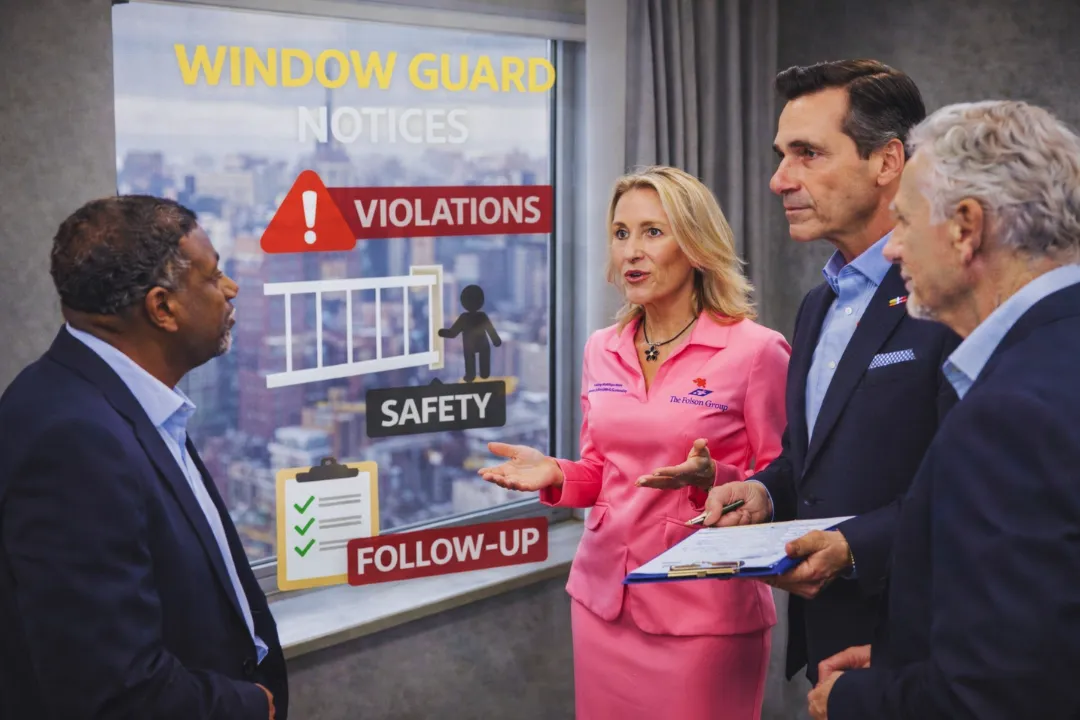
NYC Window Guard Notice Deadline: What Every Co-op & Condo Board Must Do by February
If a child’s life could depend on one simple step your building takes this winter, wouldn’t you want to get it right?
Every year in NYC, co-ops and condos must send the Window Guard Safety Notice to residents by February 15. It sounds simple. But missing it — or doing it halfway — can lead to violations, fines, and real safety risks.
From all of us at The Folson Group, here’s your friendly, plain-English guide to what this notice is, why it matters, and how you make sure your building stays compliant and safe.
The Window Guard Notice is a yearly safety notice required by NYC’s Housing Preservation & Development (HPD).
It asks residents:
Does a child 10 years old or younger live in your apartment?
Or, even if not, do you still want window guards installed?
If the answer is yes, the building must install window guards on required windows at no cost to the resident.
This applies to most multiple dwelling buildings, including:
Co-ops
Condos
Rentals
If your building has apartments with windows, this law likely applies to you.
February 15 — Send the Notice
By this date every year, your building must deliver the window guard notice to every apartment.
March — Reasonable Attempts to Collect Responses
If residents don’t respond, you must make follow-up efforts by another date in March. That means showing HPD you truly tried.
Two steps:
Send it.
Chase it.
Both matter.
This law exists for one heartbreaking reason:
Children were falling out of windows.
Decades ago, NYC saw too many accidents where young kids leaned against screens or climbed near open windows — with tragic results.
Window guards have proven to:
✔️ Save lives
✔️ Prevent serious injuries
✔️ Give parents peace of mind
This isn’t paperwork. It’s protection.
That’s why HPD enforces it every year.
If your building misses the notice, doesn’t follow up, or fails to install guards when required, you could face:
❌ HPD violations
💸 Fines and penalties
📝 Orders to comply under tight deadlines
⚖️ Legal exposure if a child gets hurt
😡 Angry residents and damaged trust
Worst case?
A preventable accident — and everyone asking what the board did to stop it.
That’s a burden no volunteer board member should carry.
In most co-ops and condos, it looks like this:
Board of Directors – Ultimately responsible for compliance
Property Manager – Prepares and sends notices, tracks replies
Super/Building Staff – Helps with access and installs
Vendors – Install approved window guards
Consultants (like The Folson Group) – Oversee, organize, and keep it on track
Even if your manager handles the work, the board owns the risk.
That’s why it pays to understand the process.
HPD expects more than one try.
If residents don’t respond, reasonable attempts may include:
Follow-up letters or emails
Slips under doors
Phone calls
Certified mail for chronic non-responders
Keeping a log of dates and methods
If an inspector asks, you should be able to show:
✔️ When it was sent
✔️ Who responded
✔️ What follow-ups you made
No proof = potential violation.
A board sends notices in February.
Most people respond. A few don’t.
Life gets busy. March passes.
Then:
A new family moves in with a toddler.
No window guard installed yet.
A complaint is filed.
HPD inspects.
Now the building is scrambling — even though this could’ve been handled calmly weeks earlier.
This is how “routine compliance” turns into emergency mode.
When a child 10 or under lives in the apartment, guards are required on:
All windows in the apartment
Except bathroom windows
And any window leading to a fire escape (special rules apply)
Guards must be:
✔️ HPD-approved
✔️ Properly installed
✔️ Maintained in good condition
Broken or loose guards can be just as risky as none at all.
We hear this a lot:
“We thought the manager handled it.”
“We’ve always done it this way.”
“I didn’t realize the follow-ups mattered.”
The challenge isn’t effort.
It’s tracking.
Multiple notices.
Different deadlines.
Changing residents.
New rules.
That’s how things slip.
The boards that avoid stress:
✔️ Start planning in January
✔️ Use clear templates
✔️ Track responses in one place
✔️ Schedule March follow-ups in advance
✔️ Confirm installations quickly
✔️ Keep records ready for inspections
They don’t rely on memory.
They rely on systems.
Window guards are part of a bigger NYC safety push.
The same day also brings deadlines for things like:
Stove knob cover notices
Lead paint safety notices
And more
That’s why February 15 has become one of the most important compliance dates of the year for co-ops and condos.
Miss it, and you’re instantly behind.
At The Folson Group, we built NYCComplianceCalendar.com so boards can:
See every deadline in one place
Get reminders before it’s due
Know what’s required each year
Track what changed
Stop scrambling
No more guessing.
No more “I thought someone else did it.”
Just clarity.
When you send the window guard notice, you’re not just following a rule.
You’re:
Protecting kids
Supporting families
Reducing risk
Showing leadership
And proving your building is well run
That’s what great boards do — even when no one’s watching.
👉 Want more tips on how to be a proactive coop board member?
The Folson Group’s mission is to serve NYC board members and have developed FREE resources based on your needs. Head over for your free download now.
Go Back To Compliance Calendar Page


